










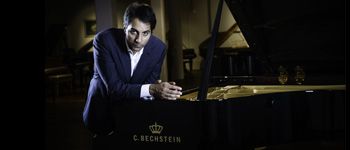


On 23 April 2026, the artist, who was born in Tel Aviv in 2000 and has just completed his studies at the Barenboim-Said Academy in Berlin under Sir András Schiff, will make his Vienna debut at the Ehrbar Saal. Carmeli spoke with Gregor Willmes about the upcoming concert, his renowned mentor and his love of jazz and acting.
Gregor Willmes: Dear Itamar, You will be performing a C. Bechstein piano recital on 23 April 2026 at the Ehrbar Saal in Vienna. Will this be your Vienna debut?
Itamar Carmeli: Yes, it’s actually my first performance there. I’m really looking forward to it!
GW: What connection do you have to Vienna? Have you been there before?
IC: I have been to Vienna before, specifically to the beautiful Ehrbar Hall. I’ve also used the lovely practice rooms in that building.
GW: Did you get to see the concert hall as well?
IC: Yes, I saw the concert hall and I liked it. I had the chance to walk around a bit and soak up the incredible atmosphere. I’m really looking forward to creating something magical there.
GW: You’re performing in the “Building Bridges” series, to which Sir András Schiff invites outstanding young pianists. Why do you think he chose you?
IC: Maestro Schiff was my mentor and teacher—the best one could hope for. The years I spent with him were invaluable, shaping both how I listen to and make music. It is a great honor to be part of this series. Who else does something like this to support the younger generation and give them this opportunity? I think what Mr. Schiff does is truly important, and I am very grateful to him.
GW: You studied with Sir András in Berlin for four years. Mr. Schiff says that the chemistry between him and his students is key to selecting them. Is that the case with the two of you?
IC: I think so. Maestro Schiff is an extremely humorous person. He has a huge repertoire of jokes. I’ve tried to hold my own against him in that regard. But, of course, my repertoire is much smaller compared to his, just like my piano repertoire. It’s hard to keep up with him. For his 70th birthday, I gave him a notebook to write down his jokes. I hope he’ll publish the book someday.
GW: Sir András also said: "Itamar is a very interesting person. He's very alert and has a wide range of interests. He's also very creative. He has a talent for acting. He has a talent for organization." Have you put your acting talent to use yet? Do concertgoers get a sense of this talent as well?
IC: I was an actor as a child. However, the more time I spent playing the piano, the less time I had for acting. However, I still love theater and language, and I believe these interests have influenced my piano playing. I’d love to do more of that when the time is right.
GW: That sounds interesting. Does that mean you’re an actor at the piano? Have you incorporated any elements of acting into your piano playing?
IC: You could call it a cliché, but with every instrument, we have to embody different characters. As actors, of course, we have to switch between different characters. As actors, when we identify with a role, we delve deep into the soul of a poet or playwright. That’s what I try to do as a musician, too. We have the privilege of reading the music of the great masters, trying to understand their scores, and bringing them to life. I think that’s the kind of connection I have with the composers. I try to embody what they really wanted to express.
GW: You also improvise. You received a scholarship to Berklee College of Music, didn't you? Did you study there?
IC: No. I had that scholarship, but I’d decided to stay in Jerusalem with my Russian piano teacher. I wanted to go to Berlin and become a conductor. We’d spent a summer at Berklee—a group of jazz musicians, very young, very eager, very vibrant, all friends.
GW: How old were you then?
IC: Maybe 16. We had a fulfilling summer. It’s a confusing part of my biography because we spent the whole summer there and played at several jazz festivals. We learned a lot. We all applied to the academy. And we received this scholarship. That was very moving. However, I had decided that I needed to do more to really go in-depth. That meant practicing at home.
GW: Do you still perform as a jazz pianist?
IC: I have a few concerts coming up this year, after a period when that really wasn’t on the agenda. I don’t think the jazz scene in Berlin was particularly appealing to me—coming from Tel Aviv. And my friends live in New York. If I had studied with them in New York, my journey would have unfolded a bit differently. Being in Berlin gave me the opportunity to go into the depth I had spoken of. An incredible body of work that I devoted myself to with Maestro Schiff. That also changed the way I improvise, because the way he teaches music, the way he thinks about music—that has now truly become second nature to me. And I think that has changed me as a pianist and as a musician.
GW: That means that when you play jazz now, you play it differently because you studied the great classical and modern works with András Schiff. And when you play classical music now, are you also influenced by jazz?
IC: Always. I think the two greatly influence each other. That’s the beauty of it. Many of the great composers whose works we perform were also fantastic improvisers—Bach and Beethoven, for example. It’s only natural that we bring that tradition back. It's unfortunate that many classical pianists don't know how to improvise. ... It's important for classical music as well. I try to play in a way that makes each concert sound a little different. Each concert should have something personal and be relevant to the moment.
GW: You’ve chosen a relatively standard classical program for your concert in Vienna. Will we hear an improvisation for an encore?
IC: Maybe. But I think my program incorporates a lot of improvisation. It allows me to bring in a great deal of spontaneity. For example, in the aria from Bach’s Capriccio, there is a figured bass, but Bach didn't notate the chords precisely above it. I think that’s an opportunity for us to improvise with how we play the chords. The piece gives us space and freedom.
GW: One highlight of your program is certainly the rarely performed piano sonata by Gideon Klein. The composer wrote it in 1943 in the Theresienstadt concentration camp. Why did you choose this piece?
IC: A great mentor and influential teacher, Professor Pavlina Dokovska, introduced me to this piece. I studied with her for a year in New York. I think it is truly a masterpiece. As artists, especially young ones, it is our responsibility to expand and revitalize the repertoire. The audience and the artists should both be tired of playing the same ten pieces over and over again. This isn't because there's nothing new left to discover in these works. I also think such a work has historical significance for me as a Jewish artist living in Germany. It's also important for me to perform it in Vienna. This music conveys intense emotions, including sarcasm, grief, and shock. The sonata is so expressive that it should be part of the standard repertoire.
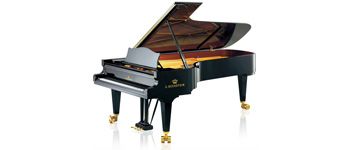
GW: In the Ehrbar Hall, you will play a C. Bechstein D 282 concert grand piano. What has been your experience with Bechstein so far?
IC: Bechstein pianos are special instruments. It's not a passive machine like some other pianos. Whenever I play a Bechstein, it feels as though the piano and I are playing together.
Photos © Eesa Khoury // Oukool.Creative & C. Bechstein / N. Kornilowa