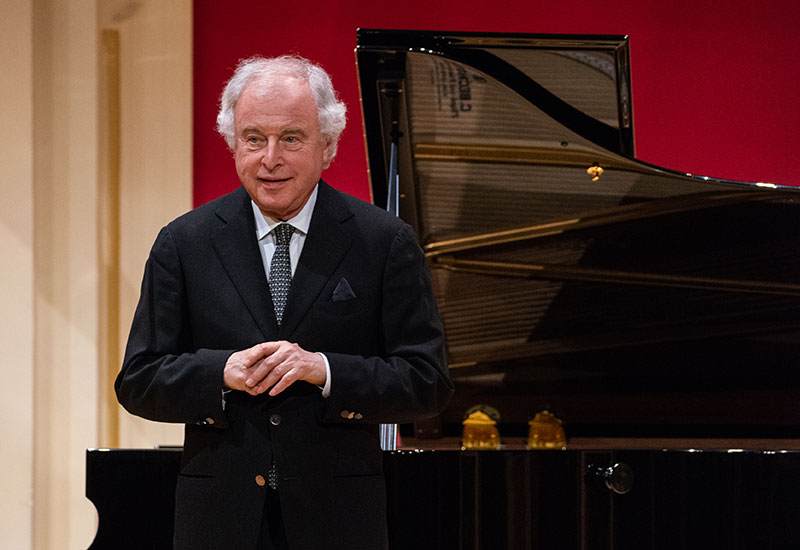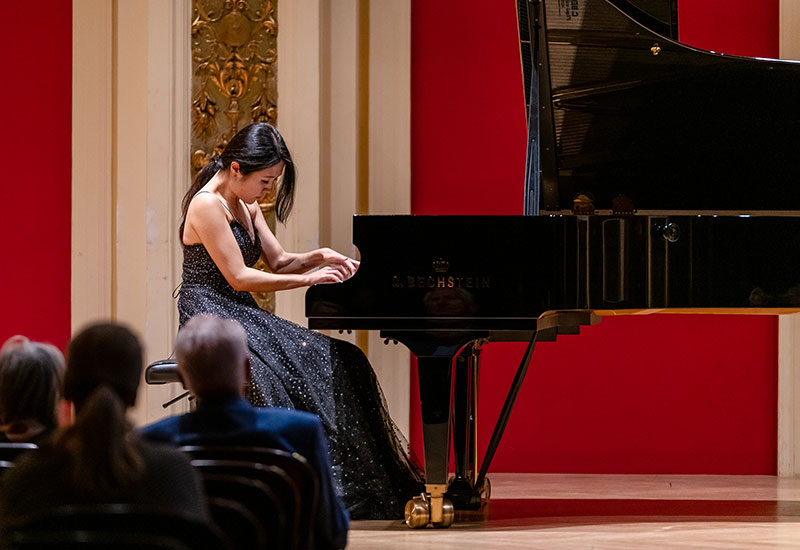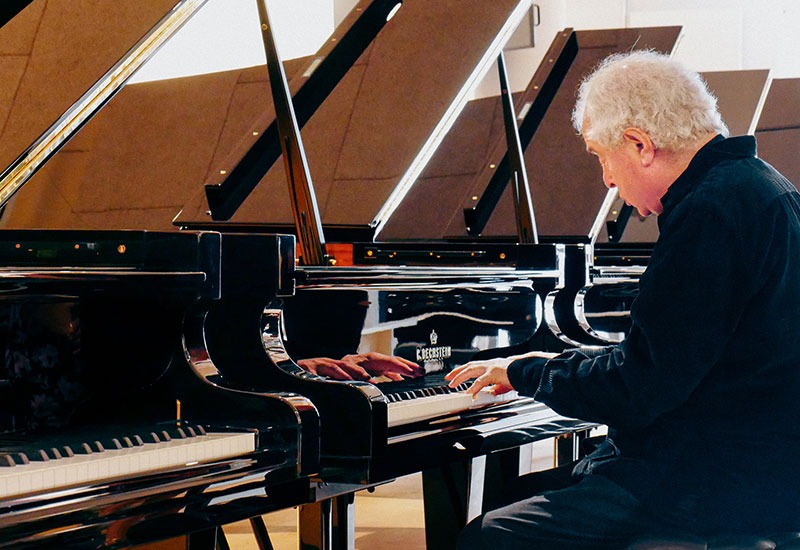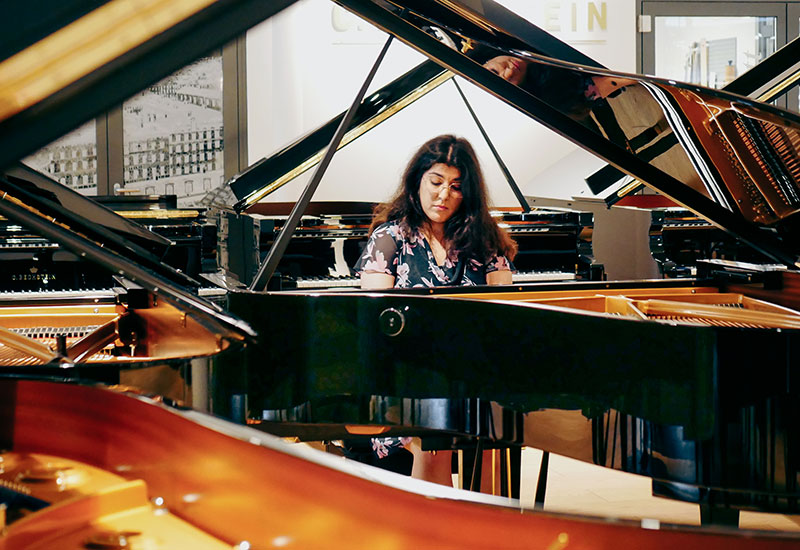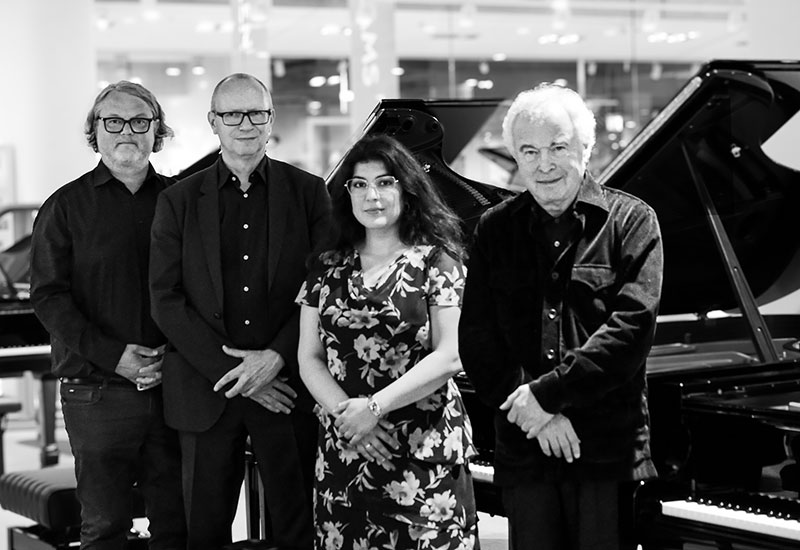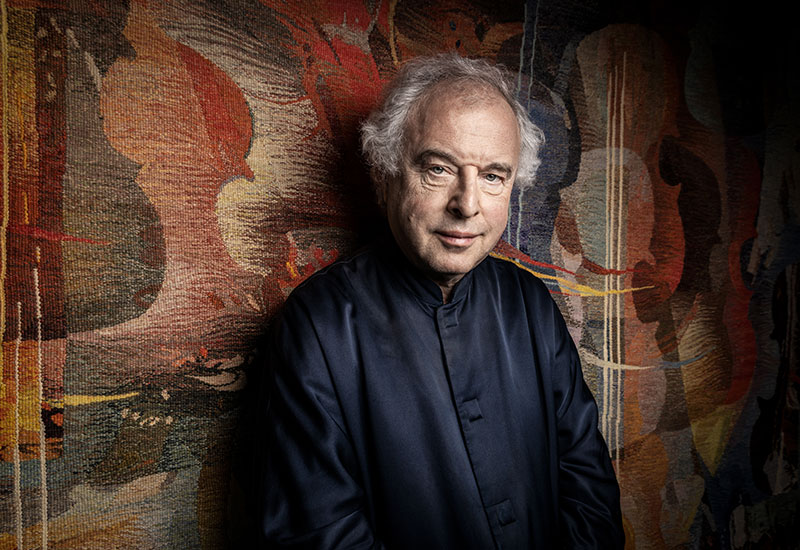















Sir András Schiff has launched a support program for young pianists called “Building Bridges,” which is also a regular guest at Vienna's Ehrbar Hall. The great master now also acted as a “bridge builder” at Schloss Elmau, where he performed himself and presented three young pianists. Gregor Willmes met the artist, who has just been awarded the Praemium Imperiale Award in the field of music, for an interview.
Gregor Willmes: Sir András, you have established a support program for young pianists and present them under the name “Building Bridges.” What criteria do you use to select the pianists for your program?
Sir András Schiff: That is always subjective. What appeals to me may not appeal to everyone. I look for personalities who have something distinctive to say, artists who, in my opinion, approach music with the right attitude. By this I mean they don’t put themselves in the spotlight, but rather serve the music and the composers, while still bringing something deeply personal and individual.
Willmes: Can you give us a specific example? What distinguishes Schaghajegh Nosrati, for instance, who was your student at the Barenboim-Said Academy in Berlin and now works there as your assistant?
Sir András: Ms. Nosrati is very important to me, above all because of her enthusiasm and her understanding of Bach. Johann Sebastian Bach is the most important composer for me. We know that Bach is compulsory in all conservatories, but it is very rare to see young people who are truly familiar with his music. For most, it remains an obligation. With her, it’s completely different: she plays Bach wonderfully, and by that I mean pure Bach, not Bach-Busoni or other arrangements.
Willmes: Schaghajegh Nosrati recorded the first volume of Bach’s Well-Tempered Clavier on a C. Bechstein concert grand piano. Are you familiar with this recording?
Sir András: I know her interpretation very well. When she was still studying with me, we worked on it together. But now she is a fully-fledged artist. Unfortunately, I haven’t yet listened to the recording itself.
Willmes: Last season, Chloe Mun was one of the “Building Bridges” artists. In 2014, at just 18, she won the Concours de Genève, and a year later, the International Busoni Competition in Italy, before she came to you. What makes her stand out?
Sir András: First of all, I want to stress that “Building Bridges” is an anti-competition initiative. I created it for young pianists in the hope that they will no longer have to rely on competitions. Nobody enjoys them — I don’t know a single young pianist who does. They enter competitions only because there is no real alternative to securing concert opportunities. That is why I want to spare them this path and instead give them a genuine alternative. Chloe was my student in Berlin, and I was very impressed by the subtlety and refinement of her playing. She can draw wonderful colors from the piano.
Willmes: So with “Building Bridges,” your name opens the door to great concerts.
Sir András: In a way, yes. But I’m not a magician. I can give young people their first opportunity, but after that it’s entirely up to them — whether they are invited back, and whether new invitations arise from it.
Willmes: At larger competitions, prizewinners also receive follow-up concerts, and it’s then a question of whether they make an impression and get reinvited, or whether the series of concerts ends and they must start over.
Sir András: Yes, unfortunately that is true. We know the long lists of prizewinners at major competitions. And then the question arises: where are they now?
Willmes: Some prizewinners from the Warsaw Chopin Competition, for example, are still very present today…
Sir András: Yes, Martha Argerich succeeded. Krystian Zimerman as well. But many others did not.
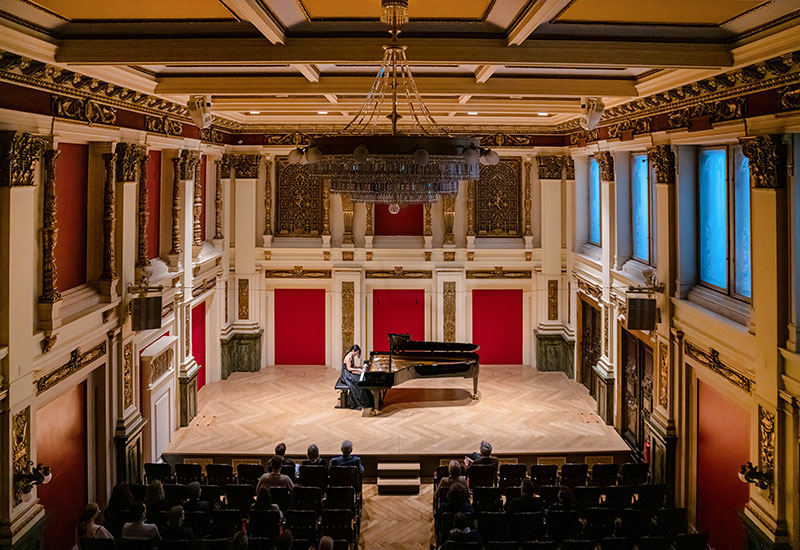
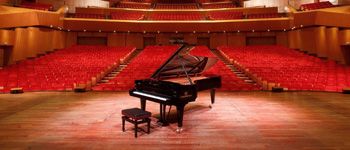
Willmes: “Building Bridges” concerts also take place at Vienna’s Ehrbar Hall, which C. Bechstein has extensively renovated and now operates. You’ve seen the hall. What makes it so special?
Sir András: It is a truly wonderful venue. Vienna is, without question, a unique city for music and music history. I believe it is the only city in Europe that, despite two world wars, still has such an incredible wealth of concert halls: the Musikverein, the Konzerthaus with their multiple halls. And the Ehrbar Hall is another jewel. I knew of it from its glorious history: Brahms played there, and many great musicians, including Arnold Schönberg, performed there. I am very grateful to C. Bechstein for reopening the hall and making it once again an important part of Vienna’s concert life. I am delighted that “Building Bridges” now has a home here as well.
Willmes: In “Building Bridges,” you put the programs together with the artists. What do you focus on?
Sir András: The ideas must come from the young pianists. They have to discuss them with me, but I don’t make the decisions. I advise them. For example, I might say: “These pieces don’t really fit together.” Or a young pianist might tell me: “I want to play Beethoven’s Opus 111 in my debut recital.” Then I advise them to wait. It’s not right for a young artist to begin with that. The repertoire is vast, and there are many works well suited for young players, while others require a certain life experience.
Willmes: Next season, on April 23, 2026, Itamar Carmeli will perform in “Building Bridges” at the Ehrbar Hall. Why did you choose him?
Sir András: Itamar has been studying with me in Berlin for four years now. He auditioned for me in Israel. At the time, he wasn’t as advanced as he is today, but you could sense, even after just a few notes, that something was there. There also needs to be a certain chemistry between student and teacher. With him, it works. He is an exceptionally interesting person — alert, curious, creative. He has talents beyond music: for acting, for organization. And he is also a gifted improviser.
Willmes: A lost art that has been making a comeback in recent years.
Sir András: Yes, and that is a good thing. Improvisation is very important. Organists have never lost it, but other instrumentalists often have.
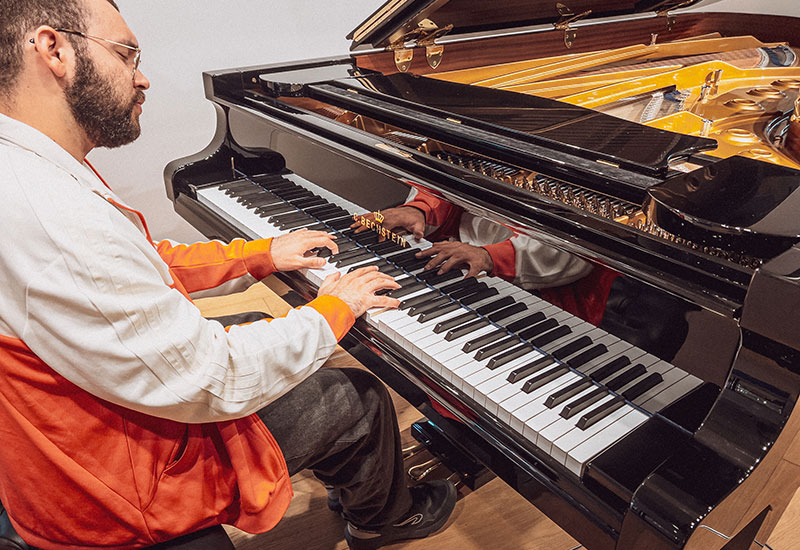
Willmes: Your protégés perform on a C. Bechstein concert grand piano in the Ehrbar Hall. At the Kronberg Academy, you teach on two C. Bechstein B-212 grand pianos, and you recently selected a new B-212 for the Mozart Hall at the Barenboim-Said Academy in Berlin. What draws you to C. Bechstein?
Sir András: C. Bechstein is a legendary brand. I am very glad it continues to thrive. They make truly magnificent pianos.
The interview was conducted by Gregor Willmes on July 4, 2025, at Schloss Elmau. The original German version can be found here on www.bechstein.com! Another detailed section of the interview will be published in one of the upcoming issues of the German music magazine FONO FORUM.
photos © dpossephotography/ C. Bechstein, N. Kornilowa/ C. Bechstein, A. Kovács/ C. Bechstein und Nadja Sjöström (Portrait András Schiff)